The first boxing lesson is rarely about throwing a powerful punch. It is about learning how to stand so you can move, protect yourself, and stay balanced when you eventually do punch. A good boxing stance for beginners should feel stable without feeling stiff. If every step makes you wobble or every movement forces you to reset your feet, your stance needs work before your combinations do.
Choose Between Orthodox and Southpaw
In an orthodox stance, the left foot and left hand lead while the right side stays behind. In a southpaw stance, the right foot and right hand lead. Many right-handed beginners start orthodox and many left-handed beginners start southpaw, but handedness is not an absolute rule. Try both positions, then work with a qualified coach to find a comfortable choice.
Get Your Boxing Foot Position Right
Start standing naturally, then step your lead foot forward and move your rear foot slightly back and to its own side. Your feet need both front-to-back distance and sideways separation. Imagine two railway tracks rather than a tightrope: one foot belongs on each track.
Keep your feet around shoulder-width apart as a starting reference, adjusting for your build. Angle your body somewhat sideways to present a smaller target. Turn the lead foot generally towards your imaginary opponent, with the rear foot angled comfortably outward. Keep both knees softly bent rather than locked.
Distribute Your Weight Without Leaning
Let your weight feel reasonably even between both legs. Stay light through the feet, with the rear heel able to lift slightly, but do not force yourself onto your tiptoes. Your head should remain between your feet instead of projecting over your front knee. A proper boxing stance allows a small step in any direction without an emergency hop to regain balance.
Build a Boxing Guard That You Can Maintain
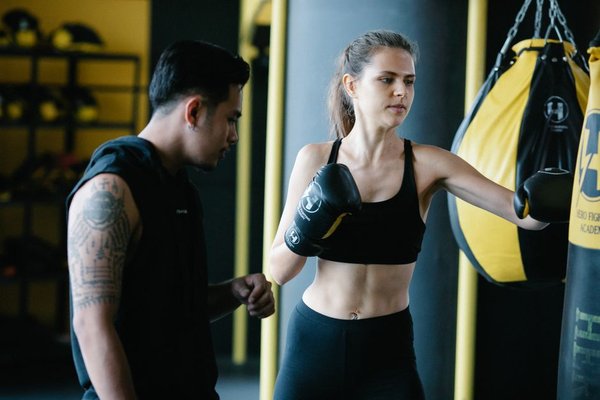
Bring both hands near your cheeks, with your rear hand especially ready to protect your jaw. Keep your chin gently tucked and look forward through your brows instead of staring at the floor. Your lead hand may sit a little farther forward, ready to measure distance, but it should not hang low simply because you are not punching yet.
Let your elbows rest relatively close to your ribs without squeezing them rigidly against your body. Keep your shoulders relaxed enough to move and breathe. A boxing guard is not just a frozen pose; it needs to return naturally after each step, slip, or punch.
Test Your Balance Before Practising Punches
Here is a useful test: hold your stance for ten seconds, then gently shift your weight forward and backward without lifting either foot. Your knees should absorb the change while your head stays relatively level. Next, take a short step and stop. If your feet meet, cross, or spread so far that you cannot move again, shorten the step.
Move While Keeping the Same Stance
Basic boxing footwork follows a practical rule: move the foot closest to your travel direction first, then bring the other foot along to restore your original spacing. Going forward, lead with the front foot. Going backward, move the rear foot first. To travel sideways, start with the foot on that side.
Use short, smooth steps instead of bouncing high or taking long strides. Avoid crossing your feet, because it narrows your base and delays your next movement. Keep your hands near your face as your feet move. If you can travel two steps but cannot stop cleanly, reduce your speed until the pattern feels controlled.
For a deeper practice session after mastering the basic stance, explore boxing footwork drills for beginners. The connection is direct: every useful footwork drill should preserve the same balanced position you established while standing still.
A Simple Ten-Minute Stance Practice
Spend the first two minutes finding your lead side and checking the distance between your feet. For the next two, hold your guard while breathing calmly and making tiny weight shifts. Use the following three minutes to step forward, back, left, and right, returning to your starting spot after each movement.
During the next two minutes, face a mirror and watch your chin, elbows, and rear heel as you move. Finish with one minute of slow, relaxed shadowboxing posture without throwing full punches. Imagine an opponent directly ahead, but concentrate on stopping in balance rather than moving fast.
Common Beginner Stance Mistakes
Standing With Feet in One Line
A narrow, tightrope-like stance may look neat from the side, but it makes sideways balance difficult. Offset your rear foot until you have enough width to move comfortably.
Squatting Too Low or Standing Too Tall
Deeply bent knees make ordinary movement tiring, while locked legs make quick adjustments awkward. Aim for a modest athletic bend that you can sustain while breathing naturally.
Leaning Too Far Forward
Reaching the upper body ahead of the feet may create the illusion of aggression, but it can make recovery difficult. Keep your head supported over your base and let footwork close the distance.
Letting the Guard Collapse During Movement
Beginners sometimes get their feet right only while standing still. Move slowly enough that your hands remain up and your chin stays protected. Do not rush into sparring to test a posture you have not yet learned to control.
When Should You Add Punches?
Once you can step, stop, and turn without losing your base, introduce a slow lead-hand jab under coaching guidance. Notice whether your rear hand stays near your face and your feet remain apart. Practise returning to your starting position before attempting faster combinations. Learning how to throw a boxing jab and basic boxing defence becomes much easier when the stance underneath each movement is dependable.
Frequently Asked Questions
How wide should a beginner’s boxing stance be?
Shoulder-width separation is a useful starting point, but there is no perfect measurement for every body. Your feet should have enough width and depth for stable movement without forcing unusually long steps.
Should my back heel touch the floor?
It may touch lightly at moments, but your rear heel should not feel planted and immovable. Keeping it light helps you pivot and move smoothly without excessive bouncing.
Do I have to keep all my weight on my front foot?
No. A balanced starting position usually distributes weight fairly evenly so you can move forward or backward. Avoid committing so much weight to one leg that the other cannot move freely.
Can I learn boxing stance at home?
Yes, you can practise posture, guard, and gentle footwork without contact. A qualified coach is valuable for correcting habits, and partner drills or sparring should take place in an appropriately supervised setting.
Build the Base Before the Speed
The best beginner stance is not the one that looks most dramatic in a photograph. It is the one you can hold, move from, and recover without losing your guard or balance. Start with your feet, keep your knees relaxed and chin protected, and build control through short, deliberate practice. Speed and combinations can come later.