
The Winter Olympics can look like a single giant tournament, but they are easier to follow once you see the structure underneath. The Games bring together snow sports, ice sports, timed races, judged competitions, head-to-head heats and team tournaments under one Olympic program. For U.S. viewers, understanding the layers—sport, discipline, event and competition round—makes the schedule less confusing and explains why some medals are decided in minutes while others take more than a week.
How the Winter Olympic Games are organized
The Winter Olympic Games are staged every four years, with athletes representing National Olympic Committees rather than professional clubs. Each edition has an official sports program, a competition schedule and a fixed number of medal events.
A useful way to read the program is from broad to specific. A sport or discipline is the larger category, while an event is the exact medal competition. Figure skating, for example, includes men’s singles, women’s singles, pairs, ice dance and team competition. Alpine skiing includes downhill, super-G, giant slalom, slalom and combined formats. That distinction explains why the number of winter Olympic events is much larger than the number of sports.
Which winter Olympic sports are included?
The program changes over time as the International Olympic Committee approves new events and, occasionally, new disciplines. At Milano Cortina 2026, the official program featured 16 sport disciplines and 116 medal events. Ski mountaineering made its Olympic debut there, showing how the Winter Games can evolve without changing their basic structure.
The 2026 disciplines were Alpine skiing, biathlon, bobsleigh, cross-country skiing, curling, figure skating, freestyle skiing, ice hockey, luge, Nordic combined, short track speed skating, skeleton, ski jumping, ski mountaineering, snowboard and speed skating.
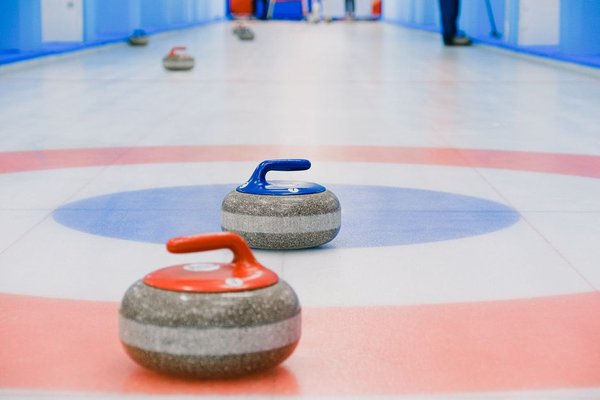
The disciplines cover very different competitions. Alpine skiing and speed skating reward the fastest time. Figure skating combines required elements with judging. Curling and ice hockey use team matches. Snowboard cross and short track move through heats where position matters. Bobsleigh, luge and skeleton add times across multiple runs. A winter olympics guide is most useful when it explains these formats, not just the sport names.
How the winter games format works
Timed races and multi-run events
Many winter Olympic sports are decided by the clock. In downhill skiing, the fastest valid run wins. Other events use multiple runs or stages, and the combined result determines the standings. Giant slalom is a practical example: athletes race two different runs, and their times are added together. If you tune in only for the second run, the leader on screen may be leading on combined time rather than simply having the fastest second run.
Judged competitions
Sports such as figure skating and several freestyle skiing and snowboard events use judging systems. Scores can reflect technical difficulty, execution, composition or other discipline-specific criteria. Some competitions have qualification rounds followed by finals, so a strong score early in the week may advance an athlete without counting directly toward the medal result.
Heats, brackets and team tournaments
Short track, snowboard cross and ski cross commonly use qualification or heat-based progression. Athletes advance through rounds until a final decides the medals. Curling generally uses round-robin play before the medal phase, while ice hockey moves through group and knockout stages. One medal event can therefore involve several separate sessions.
What counts as a medal event?
A medal event is a competition that ends with its own set of Olympic medals. A sport can therefore create many medal opportunities. Speed skating has different distances; freestyle skiing includes moguls, aerials and freeski formats; snowboard includes racing and judged events. Mixed-team events also add medals separate from men’s and women’s competitions.
This is why medal tables count medals by event, not by sport. One nation can win medals across several events within the same discipline, and an athlete may enter more than one event if qualification rules and team selection permit it.
How athletes qualify for the Winter Olympics
There is no single qualification system for every winter sport. International federations set sport-specific pathways for each Games. Depending on the discipline, quota places can be earned through world rankings, World Cup results, designated qualification competitions, championship results or minimum performance standards.
A key detail is that qualification often involves both the athlete and the country. In many sports, results secure a quota place for a National Olympic Committee, which then selects the athlete who will use it under the relevant international rules and its own selection policy.
For fans, the simplest rule is not to assume that one great result automatically means an Olympic berth. Qualification can span months, with final fields shaped by quotas, rankings, eligibility and national selection. Useful related reading includes Olympic qualification explained, a guide to Team USA selection, and an Olympic medal events overview.
How to follow the schedule as a U.S. viewer
Winter Olympic competition is spread across many venues and can start before the Opening Ceremony. Events overlap, and time zones may push live sessions into early U.S. mornings. A practical approach is to choose a few priority sports, check whether a session is qualifying or medal competition, and note whether a replay will be available.
For Milano Cortina 2026, Peacock streamed every sport and event in the United States, including all 116 medal events, while NBC and other NBCUniversal networks carried extensive television coverage. NBCUniversal holds U.S. Olympic media rights through 2036, although the exact mix of channels, streaming features and daily schedules can change from one Games to another.
When checking listings, look for words such as qualification, heat, semifinal, run, short program, free skate, round robin and final. Those labels show where the session sits in the competition. If you only want medal decisions, filtering for finals can save time; if you want to understand how a favorite athlete reached the podium, earlier rounds are often essential.
FAQ
How often are the Winter Olympics held?
The Winter Olympics are normally held every four years. They are scheduled in even-numbered years that alternate with the Summer Olympics on the Olympic calendar.
How many sports are in the Winter Olympics?
The total depends on the edition and on whether sources count broad sports or individual disciplines. Milano Cortina 2026 featured 16 sport disciplines and 116 medal events, including the Olympic debut of ski mountaineering.
Do all athletes qualify the same way?
No. Qualification rules differ by sport. International federations establish ranking systems, standards, quota procedures and qualifying events, while National Olympic Committees may also apply their own athlete-selection criteria.
Are the Winter Olympics and Winter Paralympics the same event?
No. They are separate Games with different sport programs, athletes, classifications and competition schedules, although they may use many of the same host regions and venues.
Understanding the Games makes them easier to watch
The Winter Olympics are a collection of distinct winter sports operating under a shared Olympic framework. Once you know the difference between a discipline, a medal event and a competition round, the schedule becomes much easier to read. Follow the format first, then the athletes: you will know what is at stake, why a result matters, and when a winter Olympic event is moving from qualification toward the medals.