
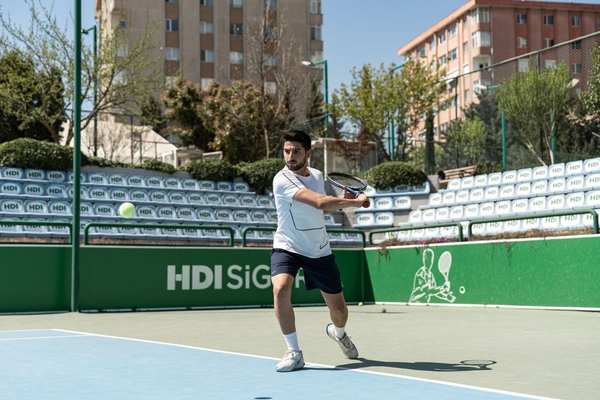
A reliable topspin forehand is not about swinging as hard as possible or forcing an exaggerated windshield-wiper motion. The goal is to send the ball forward with enough upward racquet movement to create spin while keeping the racquet face, contact point, and spacing under control. When those pieces work together, you can clear the net safely, bring the ball down inside the baseline, and create a heavier bounce without making every forehand feel risky.
Start With a Grip You Can Control
Your tennis forehand grip affects the natural angle of the racquet face and the height at which contact feels comfortable. For many beginner and intermediate players, an Eastern or semi-Western grip is a practical starting point. An Eastern grip can make clean contact and driving through the ball feel straightforward, while a semi-Western grip generally makes it easier to create topspin and handle higher balls.
There is no need to force an extreme grip just to produce more spin. Use a grip that lets you square the strings consistently, and keep your hand relaxed enough for the racquet to accelerate.
Create Space Before You Swing
Many forehand problems begin before the racquet moves forward. If the ball gets too close to your body, you lose room to accelerate and may compensate by pulling your elbow in, opening the racquet face, or flicking with the wrist. Good spacing gives your arm a comfortable hitting lane and allows the body to rotate naturally.
Turn your shoulders early, track the bounce, and use small adjustment steps so the ball arrives slightly in front and to the side of your hitting hip. That position makes the forehand contact point easier to repeat. If your arm feels jammed at impact, look at your spacing before changing the swing itself. A useful related internal-link topic here is forehand footwork drills.
Use a Forehand Swing Path That Goes Forward and Up
Topspin comes from moving the racquet from below the ball to above it through the hitting zone. The familiar cue “low to high” is useful, but it should not become an almost vertical swing. You still need forward movement through the ball. If you brush only upward, the shot may spin but land short and lack penetration.
As you prepare, let the racquet head drop below the expected contact height. Then accelerate forward and upward. Think of brushing up the back of the ball while still sending the racquet toward your target. This blend of forward drive and upward movement is the foundation of sound topspin forehand technique.
A steeper upward component can increase spin, but control still depends on timing and racquet-face angle. The objective is not maximum spin; it is a repeatable ball shape you can trust.
Meet the Ball in Front
For a typical forehand, contact should occur in front of your body rather than beside or behind you. The exact distance varies with grip, ball height, stance, and swing style. A semi-Western grip usually feels comfortable with contact somewhat farther in front than a more conservative grip.
At contact, focus on a stable racquet face and balanced body position. Do not consciously snap your wrist. Let the legs, torso, shoulder, and arm support the stroke while the hand stays relatively relaxed.
If you frequently hit late, simplify your preparation. Turn as soon as you recognize the ball is coming to your forehand, then move into position before starting the forward swing. Tennis split-step timing is a useful internal-link topic for players whose contact problems begin with late movement.
Let the Finish Follow the Swing
A good finish is the result of what happened before contact. The racquet may finish around shoulder height or across the body, so avoid forcing one exact follow-through position.
Instead, make sure the racquet continues forward and upward after impact and that you finish balanced enough to recover for the next shot. If you regularly fall sideways or cannot move after contact, reduce swing speed and rebuild balance before trying to hit harder.
Practice Shape Before Maximum Pace
Try a cross-court drill in which your goal is to clear the net by a comfortable margin and land the ball beyond the service line. Start at roughly two-thirds of your normal pace. Focus on three cues: create space, let the racquet drop below the ball, and swing forward and up.
For example, hit ten cross-court forehands and count how many land deep with visible topspin. If seven or eight stay in with good shape, increase racquet speed slightly while keeping the same contact point and swing path. If the success rate drops sharply, reduce speed again rather than changing everything at once.
When contact and swing direction stay stable, extra racquet speed can create both pace and spin. Tennis consistency drills is another natural internal-link topic for building this skill under rally pressure.
Common Topspin Forehand Mistakes
Brushing Up Without Driving Forward
If the ball spins but lands short, your forehand swing path may be too vertical. Keep the low-to-high action, but extend more through the hitting zone so the shot carries deeper.
Standing Too Close to the Ball
Crowding reduces extension and often forces last-second adjustments. Use smaller footwork corrections before the bounce so you can strike the ball at a comfortable distance.
Trying to Create Spin With a Wrist Flick
Topspin should come mainly from the racquet path and racquet-head speed, not a deliberate wrist snap. A calmer hand and smoother acceleration make the stroke easier to repeat.
Frequently Asked Questions
How do I hit a topspin forehand without sending the ball long?
Keep the racquet moving forward and upward while controlling the face at contact. Aim for comfortable net clearance rather than trying to skim the tape. If balls still sail long, reduce pace slightly and check whether the racquet face is opening before contact.
Which grip is best for a topspin forehand?
Eastern and semi-Western grips can both produce topspin. A semi-Western grip often makes heavier spin and higher contact points easier, while an Eastern grip can feel simpler for flatter drives and lower balls. Use the grip that lets you control the strings consistently.
Should I brush the ball or hit through it?
Both ideas matter. The racquet should move upward to create topspin, but it should also travel forward through the hitting zone. Thinking only about brushing can produce a weak, short ball.
Why does my topspin forehand keep going into the net?
Common causes include late contact, failing to get the racquet below the ball, closing the racquet face too much, or stopping the swing. Check spacing and preparation first, then make sure the racquet continues forward and upward through contact.
Build the Stroke Around Repeatable Contact
The most dependable topspin forehands come from repeatable fundamentals rather than one dramatic movement. Use a comfortable grip, create space with your feet, prepare early, contact the ball in front, and accelerate along a forward-and-upward path. Once those pieces are consistent at moderate speed, add pace gradually. That is the practical route to a forehand that clears the net safely, lands deep, and gives you more control from the baseline.