
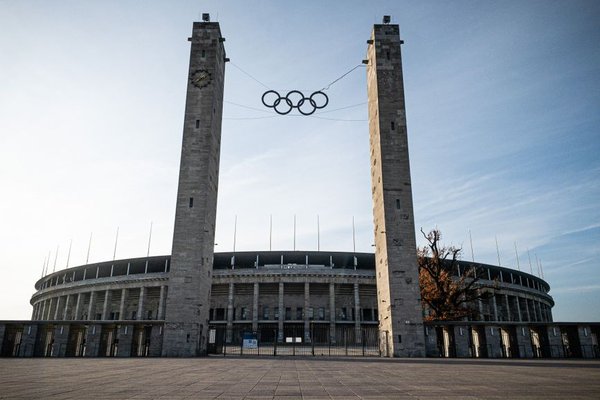
When people think about Olympic venues, the first image is usually a huge stadium during the opening ceremony. In reality, the venue network behind an Olympic Games is broader. Competition sites, training facilities, athlete accommodation, media centres and transport hubs all have to work together as one system. That is why Olympic venues explained properly means looking beyond architecture and asking whether a place can serve athletes, spectators and the host city before, during and after the Games.
Modern Olympic venue planning increasingly starts with what a host already has. An existing arena, football stadium or convention centre may be more useful than a purpose-built venue if it meets technical standards and can be adapted efficiently. The aim is to deliver reliable competition while controlling cost, reducing unnecessary construction and leaving facilities that still make sense after the Games.
How Olympic sites are chosen
Venue selection begins with the technical needs of each sport. Organisers consider the field of play, warm-up areas, changing rooms, medical facilities, equipment storage, lighting, broadcast positions and spectator capacity. International sports federations also have detailed requirements, so a venue that looks suitable from the stands may still need substantial changes behind the scenes.
Location matters just as much as the building. Host city venues must fit into a wider transport and security plan. Organisers study travel times from the Olympic Village, access to rail and roads, pedestrian routes and crowd movement. A venue that is perfect for competition but difficult to reach can still create major problems.
Why venues are often grouped into clusters
Many hosts group several sports in the same district. A cluster can share security screening, transport, workforce areas, catering, power systems and public spaces. It may also reduce the number of separate journeys required by spectators and staff. However, some sports need coastlines, mountains, white-water courses or specialist facilities, so modern planning balances compactness with practicality rather than forcing every event into one central zone.
Existing, temporary and new venues each have a role
Olympic stadiums and arenas generally fall into three categories: existing facilities, temporary venues and newly built permanent sites. Existing venues are often lower risk when they already host major events. Even so, they may require an Olympic “overlay” such as temporary seating, media platforms, security fencing, signage and extra communications infrastructure.
Temporary venues are useful for sports that do not justify a permanent facility after the Games. They can also place competition in memorable locations without leaving an underused building. Paris 2024 demonstrated this model by combining established venues with temporary sites; official post-Games reporting states that 95 percent of its venues were existing or temporary.
New permanent construction makes the most sense when the host city already needs the facility. A swimming centre, arena or community sports complex can have a strong Olympic venue legacy if local clubs, schools, teams or residents will use it for years. The risk comes when a host builds an oversized specialist venue mainly for a few weeks of competition without a credible future use.
The hidden layer: temporary infrastructure and operations
A venue is never just the structure visible on television. During the Games, organisers may add broadcast compounds, temporary kitchens, accreditation checkpoints, athlete routes, press workrooms, spectator services, medical stations and accessible seating. These additions can be expensive even when the underlying stadium already exists.
Planners therefore compare not only the buildings but also what must be added. An older arena with good transit, loading access and back-of-house space may be easier to adapt than a newer venue requiring extensive temporary works.
LA28 offers a current example. Its official venue plan relies heavily on existing stadiums and arenas and states that the 2028 Games will not require new permanent competition venues. Organisers have also shifted some events to existing facilities when doing so improves athlete and fan experience, reduces temporary construction and lowers costs. It shows that venue plans can evolve after a host is selected instead of remaining fixed at the bidding stage.
What makes a venue work for athletes and spectators?
For athletes, the best venue is predictable and functional. Travel time should be manageable, warm-up areas close to competition, surfaces must meet sport standards and equipment movement should be straightforward. Operational details often matter more than architectural drama.
Spectators care about clear entrances, reasonable queues, toilets, visibility, accessibility and a reliable route home. Olympic venue planning therefore includes crowd modelling and transport testing as well as sport-specific design.
Consider a 60,000-seat evening final. The challenge is not only seating everyone safely. Organisers must also calculate how thousands of people will reach rail stations, shuttle zones and pedestrian routes at roughly the same time. If surrounding transport cannot handle that surge, planners may change the event schedule, adjust crowd-management measures or reconsider the venue itself.
Legacy is planned before construction begins
The strongest Olympic venue legacy is usually decided years before the opening ceremony. Hosts need to know who will own a permanent venue, who will maintain it, which events it can attract and whether its capacity matches normal local demand. A huge stadium can become a financial burden if the city rarely needs that many seats.
Some venues are designed for conversion. Temporary seating can be removed or sections reconfigured so an Olympic-scale facility becomes a smaller community or professional venue. This right-sizing approach treats the Games as one phase in a building’s life rather than its sole purpose.
Useful internal links from this topic could lead readers to articles about Olympic host city requirements, the history of Olympic stadiums, and how major sporting events manage spectator transport.
Frequently asked questions
Who decides where Olympic events are held?
The local organising committee develops the venue plan with the International Olympic Committee, international sports federations, host authorities and venue owners. Each site must meet technical and operational requirements.
Do all Olympic sports take place in the host city?
No. Some events are staged outside the main host city when geography, existing facilities or sustainability make that more practical. Sailing, football, surfing and specialist outdoor events are common examples.
Why are temporary Olympic venues used?
Temporary venues reduce the need for permanent construction when long-term demand is limited. They can also allow organisers to use prominent urban locations and remove most event infrastructure afterward.
What happens to Olympic venues after the Games?
Existing venues normally return to regular use, temporary sites are dismantled, and new permanent facilities may be converted for community, professional, educational or event use. The best plans define those post-Games functions before construction begins.
A venue plan is really a city plan
Olympic venues are chosen through a combination of sporting requirements, transport capacity, cost, sustainability, spectator experience and long-term usefulness. The strongest plans use existing assets where possible, add temporary infrastructure where it makes sense and build permanently only when there is a credible future need.
A successful venue network does more than stage sport. It fits the Games around the host rather than forcing the host to reshape itself for a short event. The lasting measure of success is not how impressive a venue looks for two weeks, but how intelligently it serves both the Games and the community that inherits it.