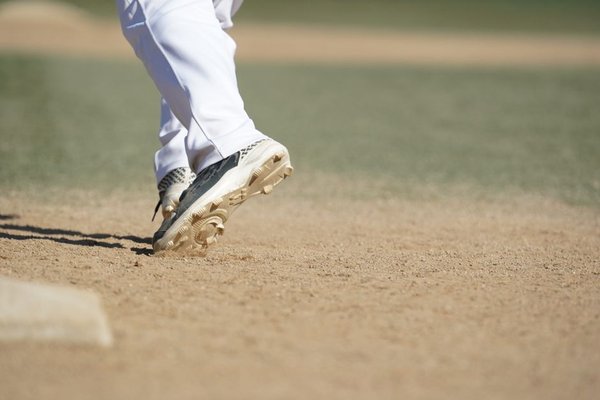
Metal spikes usually offer the sharpest bite into firm dirt and grass, while molded cleats are more versatile, more comfortable for many players, and accepted in more youth settings. That makes the metal vs molded cleats decision less about which style is “best” and more about where, how, and under which rules the player will compete.
Checking eligibility before comparing brands can prevent an expensive mistake. A great pair is useless if the league or facility does not allow it.
Metal vs Molded Cleats at a Glance
Metal cleats use thin metal spikes that penetrate the playing surface. That deeper penetration can improve grip during starts, cuts, and base running on natural grass and compacted dirt. Molded cleats use permanently attached rubber or plastic studs. They do not dig as deeply, but they spread pressure across more contact points and tend to feel more forgiving underfoot.
For mixed field types, molded cleats are usually the safer all-around purchase. When metal is allowed and natural fields dominate, it can provide a traction advantage.
Traction: Where Metal Cleats Have the Edge
The biggest performance argument for metal is traction. Narrow spikes can penetrate hard-packed dirt around the bases and grip natural grass during acceleration. That can help runners push off, infielders plant before throwing, and hitters maintain a secure base during rotation.
The advantage depends on the surface. On very muddy ground, extremely hard dirt, or poorly maintained fields, deeper spikes do not automatically mean safer footing. Good footwork and a stable plant still matter.
When Molded Traction Is Enough
Molded cleats are not simply a youth substitute. Modern molded patterns provide solid grip in most situations and transition comfortably between grass, dirt, cages, and other areas around a ballpark.
Consider a travel player who plays tournaments at several complexes. If some venues prohibit metal or use mixed surfaces, molded cleats avoid last-minute footwear changes.
League Rules Can Decide the Purchase
Youth cleat rules vary by organization and division, so parents should never assume eligibility is based on age alone. Little League provides a clear example: metal spikes or metal cleats are not permitted in the Major Division and below, while they are permitted in Intermediate (50/70), Junior, and Senior League divisions. Local leagues, tournament operators, schools, and field owners may apply additional restrictions.
Before buying, check the current rulebook for the exact division and ask whether the home field has a separate footwear policy.
When comparing the best baseball cleats for a growing player, rule compliance should be the first filter, followed by fit, surface, and position.
Comfort Over a Full Game
Molded cleats generally feel more forgiving because the studs distribute pressure over a broader area. That can help during long tournament days on hard infields. Metal spikes can create more distinct pressure points, particularly on dry, compact surfaces.
Fit matters more than cleat type, however. A poorly fitted molded shoe can cause more discomfort than a properly fitted metal model. Players should try cleats with normal game socks, leave enough toe room for movement, and make sure the heel does not lift during a hard forward step. A baseball cleat sizing guide is a useful companion topic for parents ordering online.
Durability and Cost Over a Season
Molded studs can gradually round off with heavy use, especially when players walk on concrete or asphalt. Once the studs are badly worn, the entire shoe usually needs replacement. Metal spikes may retain a sharper edge longer on appropriate surfaces, but the upper and sole plate can still wear out.
Keep game cleats off pavement and use trainers for conditioning to reduce unnecessary wear.
Field Damage and Surface Restrictions
Metal spikes concentrate force into small contact points. On natural fields, that can leave sharper marks around high-traffic areas such as the batter’s box and base paths. On synthetic surfaces, metal can damage fibers or backing systems, which is why many turf facilities prohibit it.
Molded cleats are usually less aggressive on field surfaces, though not every molded pattern suits every artificial turf system. For frequent synthetic-field play, the turf shoes baseball players use are often a better option. Turf shoes typically rely on many small rubber nubs rather than deep studs, improving comfort and reducing wear on artificial fields and hard training areas.
Players who alternate between natural diamonds and turf may benefit from approved cleats for natural surfaces plus dedicated turf shoes for synthetic fields.
Which Type Should You Buy?
Choose molded cleats when the player is in a youth division that bans metal, regularly visits facilities with footwear restrictions, wants a more forgiving feel, or needs one versatile pair for several environments.
Choose metal cleats when they are clearly permitted, natural grass and dirt are the primary surfaces, and maximum bite during acceleration and direction changes is a priority.
A smart buying order is simple: verify rules, identify the usual surface, confirm fit, then compare price and brand.
Frequently Asked Questions
Are metal cleats allowed in youth baseball?
Not always. In Little League, metal spikes are prohibited in the Major Division and below but permitted in Intermediate (50/70), Junior, and Senior League divisions. Other organizations may use different rules, so check the current league and facility policy before buying.
Do metal cleats give better traction than molded cleats?
On many firm natural grass and dirt surfaces, metal spikes can provide stronger penetration and grip. Molded cleats still offer effective traction for most players and are usually more versatile across different venues.
Can you wear metal cleats on artificial turf?
Many artificial-turf facilities prohibit metal spikes because they can damage the surface. Follow the facility’s rules. Dedicated turf shoes or approved molded footwear are often the better choice.
Are molded cleats better for younger players?
They are often the practical choice because they are widely permitted in youth baseball, tend to feel more forgiving, and work across more field conditions. The correct option still depends on the player’s league, fit, and playing surface.
Match the Cleat to the Rules and the Field
Metal cleats can deliver superior bite on natural baseball surfaces, but that advantage only matters when the rules and field allow them. Molded cleats trade some penetration for versatility, comfort, and wider youth eligibility. Check the division rulebook first, confirm the venue’s surface policy, and then choose the pair that fits securely. That approach is more reliable than buying by age, brand reputation, or traction claims alone.